
Chapter 1
IN THIS LESSON
Welcome, and thank you for taking the initiative to understand your child’s gaming experience at a deeper level. My journey into this space began as a professional gamer representing Australia in Korea, where I experienced a culture that truly accepted and integrated gaming into everyday life. I later managed a 24/7 gaming café in Brisbane CBD, hosting regular local and international tournaments, and creating a space where thousands of people—from lawyers and police officers to university students—could experience the pure joy of connection through play.
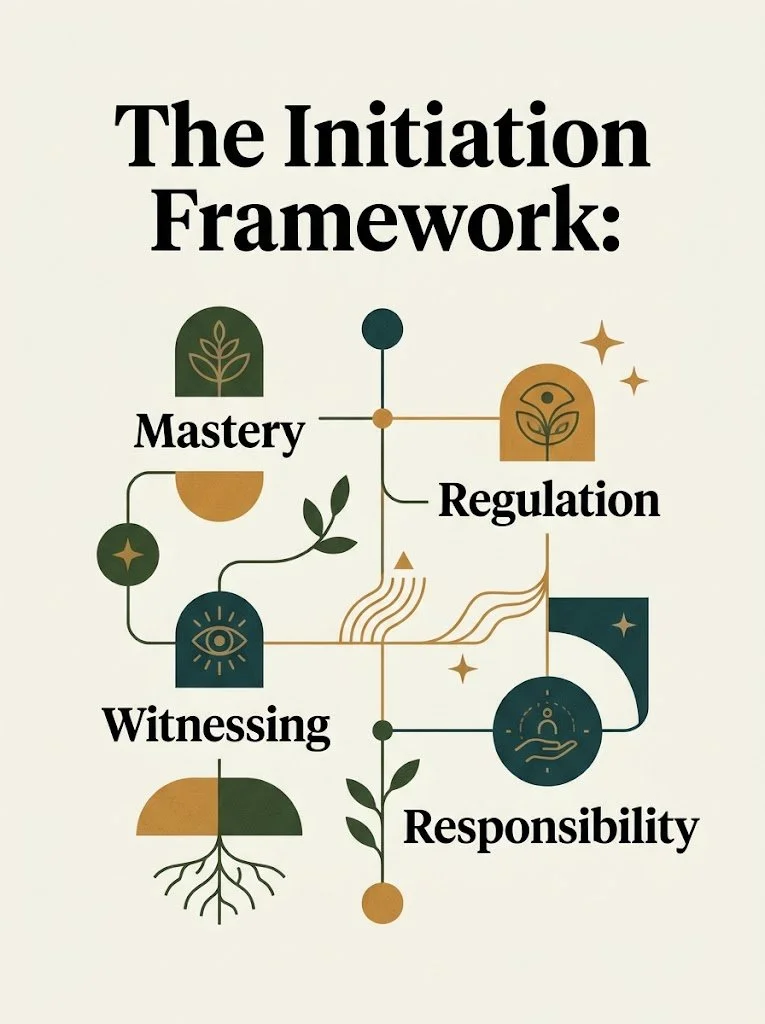
I am 100% confident that my program will help you foster a healthy, balanced gaming culture in your home. We live in an age of rapid technological change, which means both we and our children must adapt to find the 'gold' and growth these platforms offer. I view gaming as a modern initiation challenge for youth. When we hold space for them and guide them through it in a positive way, they use these experiences to grow, eventually stepping forward to conquer new challenges in the real world.
Regards,
Russ Jalakai.
Module 1: Understand the Culture of Computer Gaming in Your Child's Life
Accepting the facts of Australian youth gaming culture.
As humans, we are tribally wired. We naturally gravitate toward one another to find connection, overcome challenges, and build a sense of identity. If it feels like gaming is happening more than you’d like under your roof, please know that you are far from alone. You are navigating a sweeping cultural tide, parenting through a massive technological shift that has completely captured the imagination of our youth.
Gaming is nearly universal among Australian youth. Data highlights the scale of participation:
89% of Australian children aged 8 to 17 have played an online game in the past year.
79% of young players regularly engage in multiplayer online games with others.
98% of Australian households with children own a video game device.
Daily Frequency and Time Spent
For most teens, gaming is a deeply ingrained daily habit. According to a Bond University report, young gamers typically log on three times per day, averaging about 100 minutes of total play. Overall screen time has soared, with secondary students averaging over 9 hours daily (of which gaming makes up a significant portion).
Not All Games Are Created Equal (Understanding Genres and the Brain)
To successfully bridge the gap between your world and your child’s digital world, you need to know what kind of landscape they are actually standing in.
Saying "my child plays video games" is as broad as saying "my child plays sports." A child playing high-contact competitive rugby is having a vastly different physical and emotional experience than a child doing solitary long-distance running. The same applies to gaming. Different gaming styles demand entirely different skill sets, present unique frustrations, and trigger completely different neurochemical responses in the brain. Understanding these differences helps you decode your child's mood when they finally take off their headset.
The Major Gaming Styles and Their Real-World Challenges
Here are the most common online gaming genres your child is likely playing, and the specific cognitive challenges they present:
Genre
Examples
The Concept & Challenge
Real-World Skills Developed
1. FPS (First-Person Shooters)
Valorant, Call of Duty, Overwatch, Apex Legends
Split-Second Processing: Highly competitive, fast-paced team games viewed through the character's eyes. Requires elite hand-eye coordination and rapid spatial awareness.
Crisis management, rapid decision-making, concise communication under pressure, emotional regulation.
2. RTS & MOBA (Strategy / Battle Arena)
League of Legends, Dota 2, StarCraft
Macro and Micro-Management: Top-down perspective controlling armies/characters. Players balance immediate precise movements with long-term map objectives (like playing speed-chess while balancing a checkbook).
Forward planning, resource allocation, predicting opponents' strategies, teamwork, accepting defeat.
3. Sandbox / Survival / Crafting
Minecraft, Rust, ARK
Self-Directed Goal Setting: Players are dropped into an open world to gather, build, and survive. The game rarely tells you what to do; players must delay gratification to build complex systems.
Architectural logic, self-motivation, long-term project management.
4. MMORPG (Massive Multiplayer)
World of Warcraft, Final Fantasy XIV
Social Politics and Dedication: Thousands of players in a persistent world. High-level achievements require large groups (guilds) coordinating schedules and practicing routines for weeks.
Community organization, scheduling, dedication to a long-term role, navigating social hierarchies.
Competitive vs. Creative Gaming
It is vital to distinguish between games built for competition and games built for cooperation or narrative.
Competitive Gaming (PvP: Player vs. Player): High stakes, zero-sum. For your child to win, another human must lose. Players are fighting for rank and status. Parent Takeaway: Interrupting a ranked PvP match is like walking onto a tennis court during a tie-breaker. The frustration you receive is tied directly to the intensity of the competition.
Creative / Story-Driven Gaming (PvE: Player vs. Environment): Exploratory, narrative-rich, or collaborative. The reward is internal validation (seeing a story conclude or building a digital castle). Parent Takeaway: These games are much easier to pause. Post-game irritability is usually due to screen fatigue, not competitive stress.
The Social Etiquette of Gaming: Cooperation and Toxicity
Because most modern games are live, multiplayer ecosystems, they function as massive digital playgrounds. Just like a physical playground, there is an established social etiquette, the need for good manners, and the unfortunate reality of bullying and abuse.
The Importance of Manners and Cooperative Behavior
Winning in team-based games is nearly impossible without cooperation. Players must share resources, communicate enemy positions clearly, and support each other's roles. Good sportsmanship is highly valued in these communities. Typing "GG" (Good Game) at the end of a match, apologizing for a mistake, and encouraging a struggling teammate are the digital equivalents of helping an opposing player up off the football field.
The Dangers of Toxic Players
Unfortunately, the anonymity and high-stress environment of competitive gaming can breed toxicity. Toxic players may engage in verbal abuse over voice chat, type hateful messages, or deliberately sabotage their own team (known as "griefing"). Being on the receiving end of this abuse can severely impact a child's mood, self-esteem, and emotional regulation, often causing them to "tilt" (become overly frustrated and play worse).
Protection Parameters: Communication and Behavior Scores
To combat toxicity, modern game developers have implemented background systems to protect users and punish abusers:
Communication Scores: Systems that monitor text chat (and increasingly, voice chat) for slurs, threats, and harassment. Players who consistently receive reports from others for verbal abuse see their communication scores drop, resulting in temporary or permanent "mutes" where they cannot speak to other players.
Behavior Scores: A hidden (or sometimes visible) rating of a player's reliability and manners. If a player frequently goes AFK (Away From Keyboard), abandons live matches, or griefs their team, their behavior score plummets.
The Consequence: Many games use these scores for matchmaking. If a toxic player has a terrible behavior score, the game will isolate them by only placing them in matches with other highly toxic players, effectively shielding the general player base from their abuse.
Decoding the Digital Dialect (Gaming Culture & Slang)
When you travel to a foreign country, learning a few basic phrases shows the locals that you respect their culture. The goal here is comprehension, not assimilation. By understanding their language, you can better understand their emotional state.
1. State of Play & Connection
AFK (Away From Keyboard / Controller): The player has stepped away. If they say "I can't go AFK," it means their team relies on them, or the game will penalize them for abandoning a live match.
Lag: A delay between pressing a button and the action happening, usually caused by poor internet. It feels intensely unfair, like tripping on an invisible wire during a race.
Lobby: The virtual waiting room where players gather and form teams before a match.
2. Effort and Progress
Grinding: Doing repetitive tasks to earn a reward or gather materials. Parent Tip: A great time to validate their perseverance.
Sweaty / A Sweat: Someone trying incredibly hard to win in a casual game mode; implying they are literally sweating from the effort.
Carrying: When one highly skilled player does most of the work to help a weaker team win.
3. Emotions and Behavior
Tilted: Borrowed from pinball, meaning a player is so frustrated by losing that they are making poor decisions, leading to more losses. Parent Tip: Gently suggest a break to reset their mindset.
Rage Quit: Abruptly shutting off the game out of pure anger.
Griefing / Trolling: Deliberately sabotaging other players just to get a reaction.
GG (Good Game): The digital equivalent of lining up to shake hands after a match.
4. Mechanics and Updates
Buff / Nerf: When developers make a character stronger, it's "Buffed." If made weaker, it's "Nerfed."
NPC (Non-Playable Character): Background computer characters. Note: Recently used as youth slang to describe a real person who blindly follows the crowd.
The Translation Exercise:
If they say: "I was doing so well, but my teammate went AFK and the lobby was super sweaty and I lost my rank!"
You translate: They put in a lot of effort, someone let them down, the competition was unfairly stressful, and they lost something they worked hard for.
Online gaming and your child's safety.
The Reality in Australia: What the Local Data Tells Us
We cannot afford to be naive about the digital landscape our children are navigating. The platforms where our youth seek connection and tribal belonging are the exact same spaces being exploited by bad actors. Understanding the reality in Australia is our first step in creating a safer gaming culture at home.
A Staggering Increase in Reports: The problem is growing rapidly. In the 2024–25 financial year, the AFP-led Australian Centre to Counter Child Exploitation (ACCCE) received 82,764 reports of online child sexual exploitation. That is a massive 41% jump from the previous year, equating to an average of 226 reports every single day.
The In-Game Chat Threat: The AFP explicitly warns parents that predators are actively weaponising the chat functions inside online games. Bad actors often pose as children themselves or exploit profile details to pretend they are a "friend of a friend" to build trust.
Early Exposure: By the time Australian children are between 8 and 11 years old, over half (54%) are already playing interactive games online, providing a massive hunting ground for those looking to exploit them.
The Normalisation of Strangers: For this generation, talking to strangers online is entirely normalised. Research shows that 60% of children have communicated with someone they first met online, and concerningly, one in eight has met someone face-to-face after first connecting on the internet.
The gap between what our children are experiencing and what we think they are experiencing is wide. Parent awareness regarding their child's exposure to inappropriate online contact is significantly lower than the actual rate of exposure. This is exactly why we must lean in, understand the games they play, and guide them through this modern initiation safely.
The Playbook: How Predators Operate
Predators are patient. They look for kids who might be feeling isolated, lonely, or desperate to fit in—exploiting that exact tribal need for belonging and connection. Here is how the grooming process typically unfolds in a gaming environment:
The "Friendly Teammate" Approach: They don't start with inappropriate behavior. They start by being helpful. They offer advice, carry the team in a difficult match, or simply listen when a child complains about school or their parents.
The In-Game Currency Trap: Sudden gifts of V-Bucks, Robux, or rare weapon skins are used to build trust and create a false sense of obligation or debt.
The Platform Shift: Once trust is established in the game's public voice or text chat, the predator will push to move the conversation to private, unmonitored spaces like Discord, Snapchat, or Telegram, where messages can disappear and parents cannot see them.
What Our Children Need to Know
To keep our kids safe, we have to teach them the rules of the digital road. They need to understand these four core concepts:
Free isn't Free: An adult or older teen offering in-game currency or rare skins for free is a major red flag. Gifts from strangers always come with a hidden price tag.
Keep the Chat in the Game: If a stranger asks to move the conversation from the game lobby to a private messaging app, the answer must be no. This is the most critical boundary to establish.
Personal Info is a Puzzle: Predators don't need a home address to find them. They piece together small clues: the name of a school mascot, a local sports team shirt on a webcam, or a complaint about the local weather.
They Are Never to Blame: If someone tricks them, forces them into a corner, or threatens them, they need to know they can come to you immediately without fear of losing their gaming privileges, having their PC taken away, or being shamed. Silence and fear are a predator's greatest weapons.
As we help our children navigate this modern initiation challenge, we must hold the space for them to experience the joy of play safely. By bringing these conversations into the light, we remove the secrecy that bad actors rely on.
Platform Safety Guide: Securing Roblox, Discord, and Steam
🟥 Roblox: The Digital Playground
Roblox is a massive digital ecosystem where players create and explore millions of games. Its safety controls are highly customizable and centralized in a dedicated dashboard.
The Hub (Parental Controls): You can link your email to your child’s account (which requires age verification via a government ID or credit card) to manage their settings remotely from your own device.
Content Maturity: This allows you to restrict access to games based on age ratings, effectively blocking experiences that feature moderate violence, crude humor, or sensitive themes.
Chat & Connections: You can disable direct chat entirely, limit who can join their private servers (e.g., restricting it to "Connections" only), and review or block users on their Connections list.
Spending & Screen Time: Recent updates allow parents to set hard monthly spending limits (with email notifications triggered for high spending) and apply strict daily screen-time limits.
🟪 Discord: The Communication Hub
Discord is the primary communication app for gamers. Because it allows access to massive public servers where anyone can join, strict boundaries are essential.
The Hub (Family Centre): You link your Discord account to your teen’s by scanning a QR code generated on their screen.
Visibility, Not Surveillance: Family Centre shows you who your child is messaging, calling, and which servers they are joining, but it respects their privacy by not showing the actual content of their messages.
DM Filters: In the Content & Social settings, you can block direct messages from non-friends and filter all incoming messages to prevent spam from strangers.
Sensitive Content Filter: This setting automatically blurs or blocks graphic and sensitive media sent in direct messages.
🟦 Steam: The PC Gaming Library
Steam is the dominant storefront and library for PC games. Its safety features focus heavily on restricting access to content rather than monitoring conversations.
The Hub (Family View): This acts as a PIN-protected lock over the Steam account.
Curated Library: Instead of blocking specific titles, Family View hides everything by default. You manually select and approve only the specific games your child is allowed to see and play.
Store & Community Lock: This is the most crucial setting. You can lock the Steam Store (preventing browsing and buying) and disable the Steam Community entirely, which removes access to public forums, profiles, and stranger friend requests.
The Steam Blind Spot: Family View controls which games open, but it does not control in-game behavior. If you approve an online multiplayer game (like Apex Legends or Counter-Strike), your child can still use the voice and text chat inside that specific game.
The "What Would You Do If...?”
Use “What would you do if…?” questions as a low-pressure way to gauge his baseline instincts.
"What would you do if someone in a lobby says they are your age and asks what school you go to?"
"What would you do if an online friend asks you to send a photo of yourself?"
"What would you do if a friend tells you they are going to meet up with a guy they met online because they've been talking for months and 'it's safe'?"
Discuss the answers together. The goal is to establish that people online may not be who they claim to be, and personal information should never be shared.
Role-Play Scenarios
Once they are comfortable with the warm-up, try acting out these situations. You play the "stranger" or "friend," and have him respond to you in real-time.
Scenario 1: The In-Game "Gifter"
The Setup: He is playing a multiplayer game. You play a high-level player who offers him a rare item or currency, but you tell him he has to leave the game and join a private, unmoderated Discord server to get it.
The Goal: Practice declining conditional gifts and recognizing the danger of moving conversations away from moderated game servers.
Scenario 2: The Real-World Crossover
The Setup: You play an online friend he has been gaming with for three months. You tell him you are coming to his town on vacation and want to hang out face-to-face.
The Goal: Reinforcing the rule that online friends stay online. He needs to practice saying that any real-world meeting requires an adult to be involved in the planning and present at the meeting.
Scenario 3: The Urgent Ban
The Setup: You play an automated system or admin sending an urgent direct message: "Your account has been flagged for cheating and will be permanently banned in 5 minutes unless you click this link to verify your password."
The Goal: Recognizing phishing tactics and the false sense of urgency scammers use to force quick, emotional reactions.
How to Run a Successful Session
When you are ready to practice, follow these steps to ensure the exercise feels like a game rather than a test.
1.Set the Ground Rules:
Explain that you aren't testing him or looking for reasons to restrict his internet access. You are just practicing how to handle tricky situations so he doesn't get caught off guard when they actually happen.
2.Play the Scenario Through:
Stay in character. If he gives an unsafe answer, don't immediately stop and correct him. Let the scenario play out a little bit further so he can experience the natural consequence of that choice.
3.Debrief and Reset:
Break character and ask how the interaction felt. Discuss what the "red flags" were, what went well, and establish a clear, repeatable rule for that specific situation moving forward.
-
Add a short summary or a list of helpful resources here.